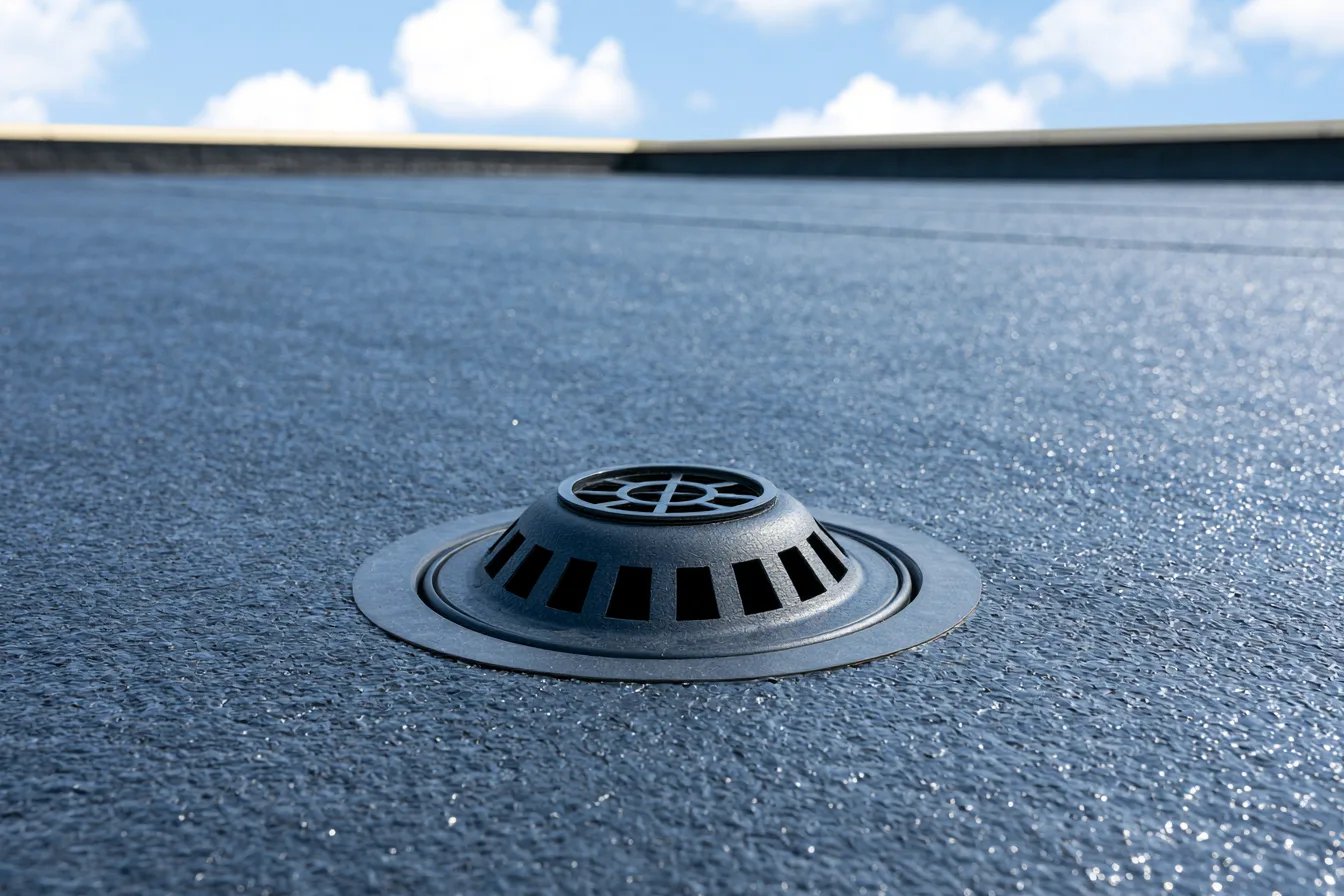
At the drain
The membrane-to-drain connection has to be sound, and water needs a clear route into the outlet. A blocked system needs clearing as well as any roof repair.
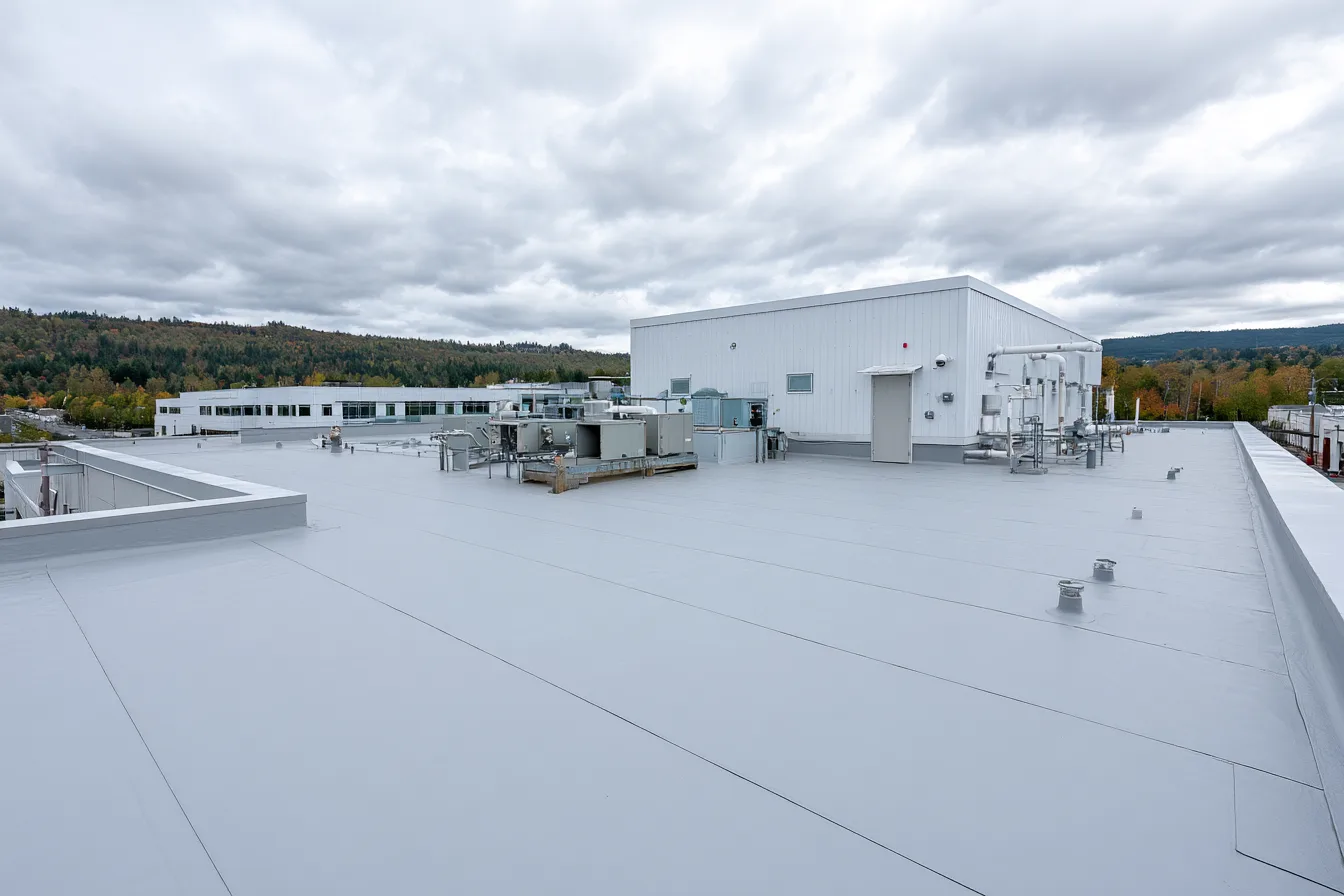
Water on a ceiling tile is the result of a roof problem, not a map to the opening. Flat-roof repair in Glenpool starts with the water path, the membrane and the layers that need to stay dry.
A low-slope roof relies on drains, scuppers or edges to move water off its surface. A blocked outlet or a damaged connection changes that path. Water can also travel within an assembly before it appears over a tenant space.
Repair needs to address the entry point and any wet or unsound material that the opening has affected. The roof type determines the compatible patch and preparation. A product suitable for one membrane can be a poor choice for another.
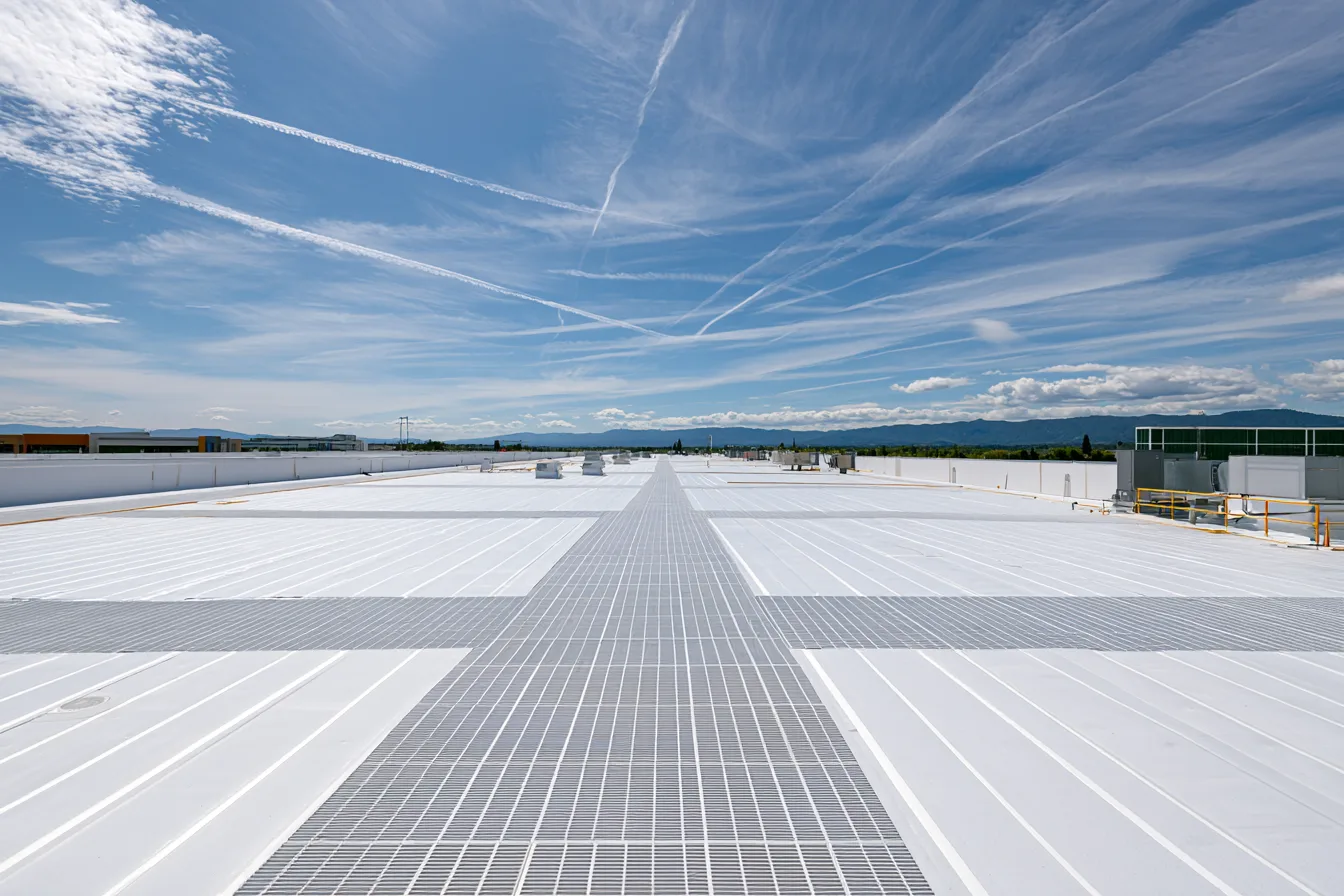
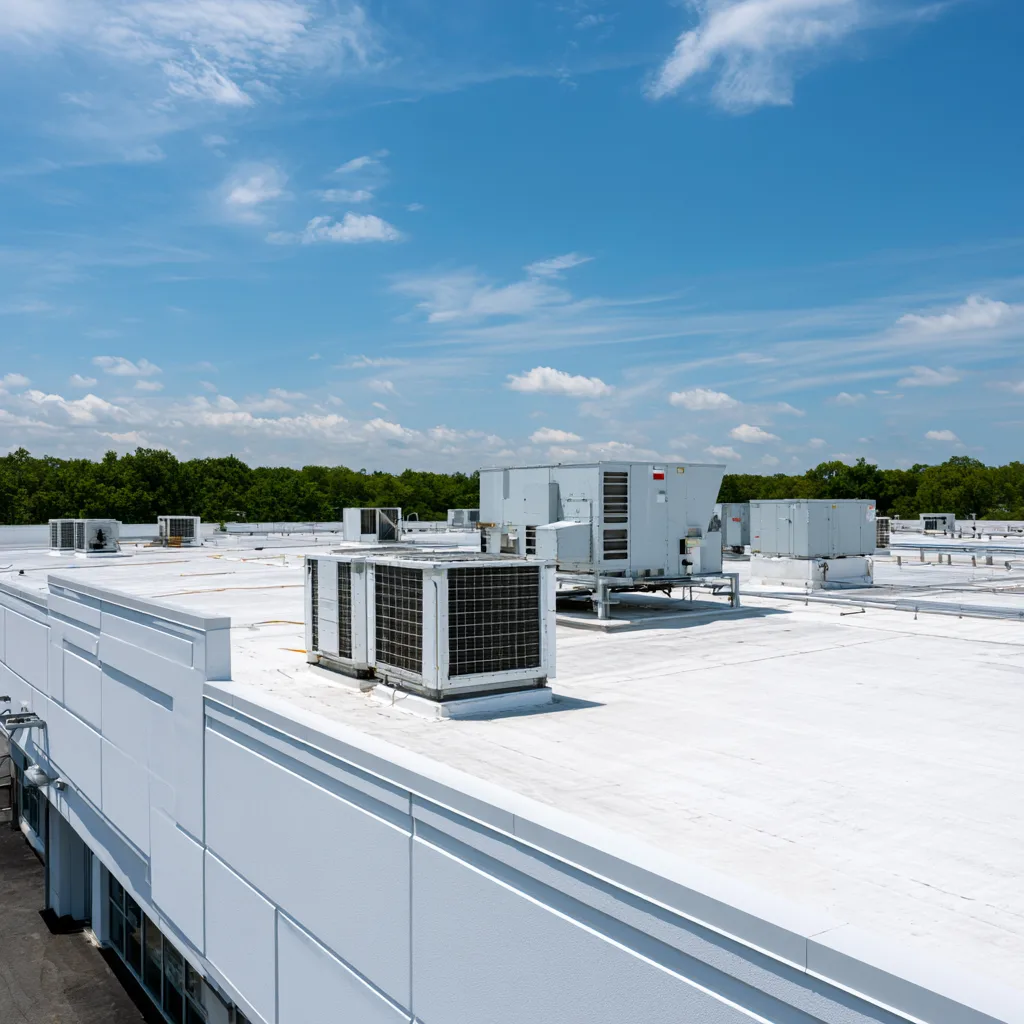
The roof and the mechanical equipment share space, but they do different work. The leak needs to be traced before assigning the repair.
Roofing and mechanical work may both be needed. Fixing one trade’s connection does not establish that the other is sound.
The membrane-to-drain connection has to be sound, and water needs a clear route into the outlet. A blocked system needs clearing as well as any roof repair.
An opening between sheets needs a compatible reconstruction on sound material. The repair needs enough area to form a durable connection beyond the failure.

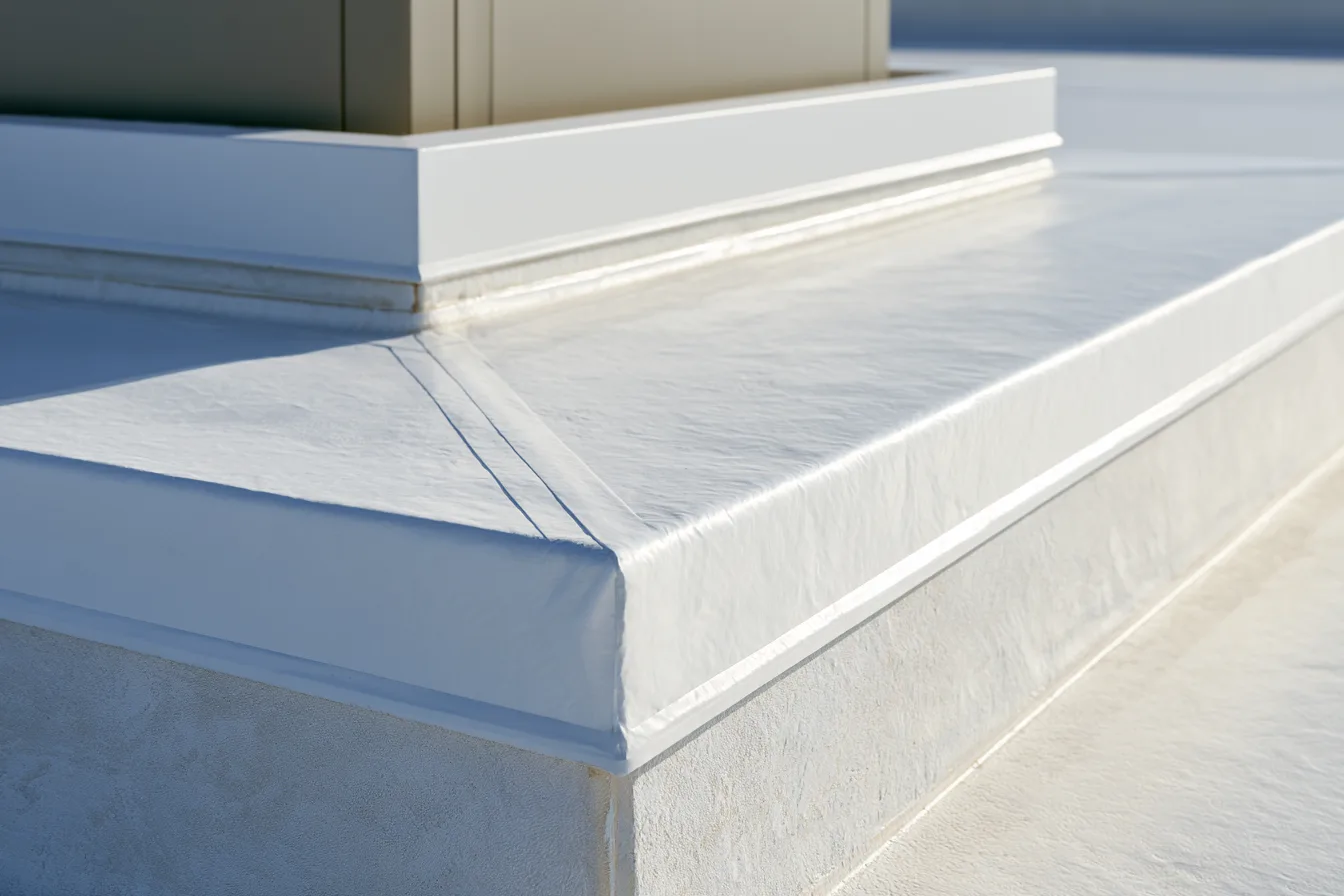
Changes in direction concentrate detail work. Corners and the top termination need to remain connected as the building and equipment move.
Insulation can hold water out of sight below a membrane. The visible wet spot inside may be smaller than the material affected above it. A surface patch can stop entry while leaving that damaged material behind.
The extent of moisture is therefore part of deciding whether the job stays local. Broad wet areas, repeated failures or an exhausted membrane move the conversation toward a larger renewal. Coating should not be used to conceal that condition.
Yes, if each repair addresses its cause and connects to serviceable material. Repeated failures in several areas can be evidence that the roof needs a broader plan.
Low-slope roofs still need a designed water path. Persistent ponding calls for a drainage review and assessment of the roof system, rather than assuming it is normal.
The leaking space, when water appears, roof access and any nearby equipment are helpful. You do not need to identify the membrane or climb up before requesting help.
Tell us where water appears and how that space is used. A free inspection helps connect the inside concern to the roof work it needs.